Regular News
October 19, 2023

Solar power plants today play an irreplaceable role in the production of so-called clean energy as well as in efforts to reduce emissions. However, photovoltaic parks occupy large areas of natural land, making it essential to address their ecological impact during construction and operation.
This means ensuring soil and vegetation quality recovery through proper seed selection and the choice of an appropriate maintenance method.
If you operate a solar power plant, you probably consider various vegetation maintenance methods: grazing, mowing, or mulching.
This article discusses the advantages and disadvantages of these maintenance options, their impact on the ecosystem within the power plants and surrounding landscapes, and the associated costs.
The article is based on the study “Suitable sward management in photovoltaic parks in relation to sustainability and ecosystem services – a review,” conducted by the Czech University of Life Sciences Prague, specifically the Department of Agroecology and Crop Production at the Faculty of Agrobiology, Food, and Natural Resources.
The species composition of grass affects both the ecosystem and subsequent maintenance requirements. Therefore, selecting the right seed mixture is crucial when establishing grasslands.
Maintaining the ecological benefits of vegetation requires diversity, vitality, and resilience, influenced by adequate watering, nutrients, and timely harvesting.
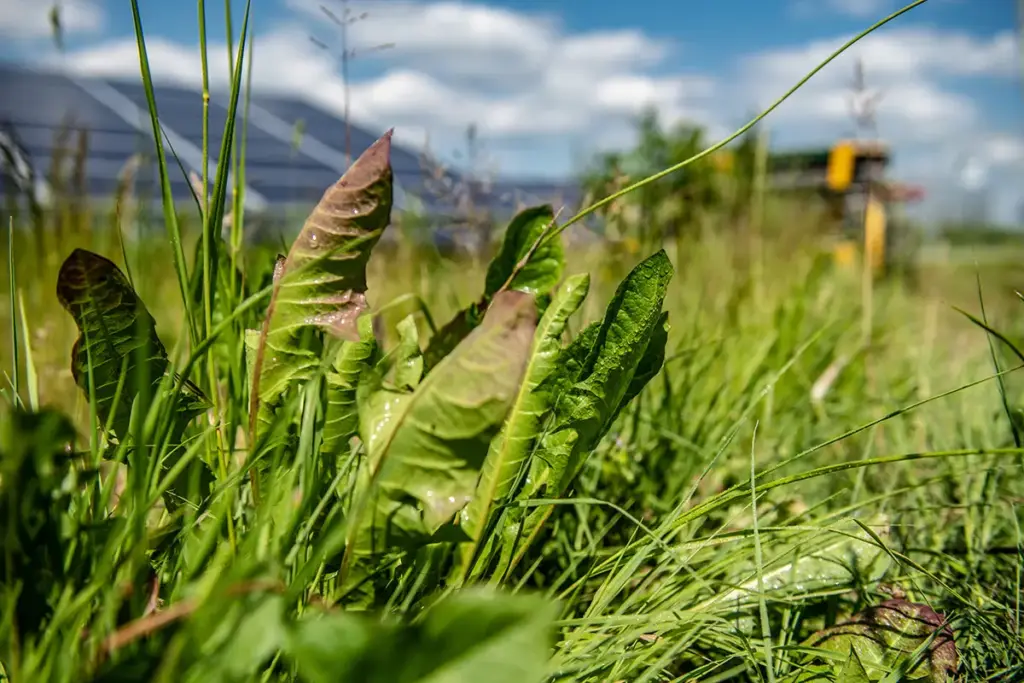
Each vegetation management method has its unique benefits:
The choice of methods depends on the specific conditions of the solar park, its infrastructure, and the operator’s goals. Let us take a closer look at each maintenance type.
The grazing sheep is often mentioned as a low-cost, environmentally friendly way to manage vegetation in solar parks while utilizing the growing vegetation. Sheep graze and naturally fertilize the soil in the process. Grazing has a low environmental impact as it does not require the use of heavy machinery. However, it also brings a range of disadvantages and complications.

